Types of Breakfast Cereals: Granola, Muesli, and More
by Touseef Shaikh
There are more types of breakfast cereals than most people realize — granola, muesli, corn flakes, puffed rice, and warm oatmeal all belong to the same broad category. Our team put this guide together to help anyone make sense of the cereal aisle and choose options that actually fit a morning routine. For brand-level picks and deeper comparisons, our breakfast cereals resource page is the best place to start.
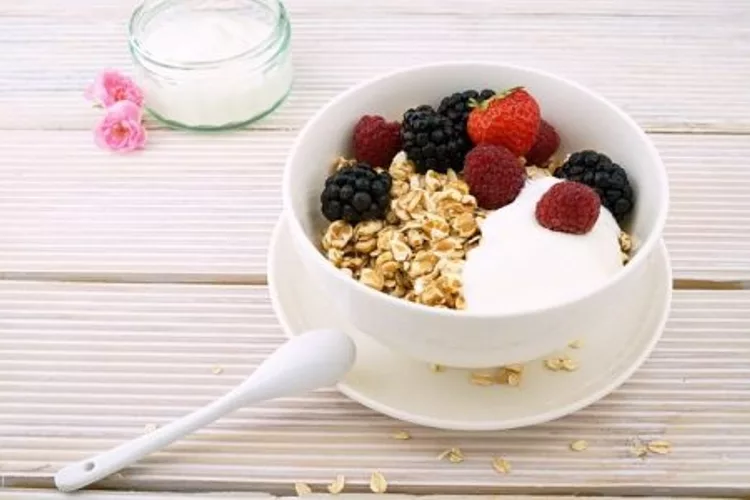
Breakfast cereal has a longer history than most people think. According to Wikipedia, the first ready-to-eat cereals appeared in the late 19th century as a health-focused alternative to heavy cooked breakfasts. Since then, the market has expanded into hundreds of products — some genuinely nutritious, some barely distinguishable from a candy bar dressed up in fiber claims.
Our team has compared options across every major cereal type, from fast cold cereals to slow-cooked hot porridges. The sections below break down what each type really is, how they differ nutritionally, and where most people go wrong when shopping for them.
Contents
- Breakfast Cereal Myths Our Team Keeps Hearing
- The Main Types of Breakfast Cereals Explained
- How to Read a Cereal Label Without Getting Lost
- Our Best Tips for Getting More Out of Breakfast Cereals
- Types of Breakfast Cereals Compared Side by Side
- Mistakes Most People Make When Choosing Breakfast Cereal
- Building a Smarter Breakfast Cereal Routine
Breakfast Cereal Myths Our Team Keeps Hearing
The Sugar Assumption
This is one of the most widespread assumptions in the breakfast space, and it's only partially true. Many popular cereals — especially those aimed at children — do contain significant added sugar. But lumping every cereal into the same category misses a lot of nuance. Whole-grain options like plain rolled oats, unsweetened muesli, and bran flakes often contain virtually no added sugar at all.
Our team found that sugar content across the cereal category ranges from under 1 gram per serving to over 20 grams. That difference matters, especially for anyone managing energy levels or blood sugar through the morning. Comparing a plain oat porridge to a frosted corn cereal is essentially comparing two completely different foods.
- Plain oatmeal: 0g added sugar
- Unsweetened muesli: 0–3g added sugar
- Sweetened granola: 6–14g added sugar
- Frosted or coated flake cereals: 10–20g added sugar
Team tip: Checking the "Added Sugars" line on the nutrition label — not just total sugar — gives a much clearer picture of what's actually going into the bowl.
Cereal Is Just for Kids
Another persistent and unhelpful myth. Many cereals are specifically formulated for adults — high-fiber bran cereals, protein-fortified muesli blends, and low-sugar whole-grain flakes are all aimed at grown-up nutritional goals. Hot cereals like oatmeal and cream of wheat are consumed almost entirely by adults, yet rarely get included in the "cereal" conversation. Our team finds that dismissing breakfast cereals as kid's food means overlooking some of the most convenient and genuinely nutritious pantry staples available.
The Main Types of Breakfast Cereals Explained
Understanding the core differences between the main types of breakfast cereals makes grocery shopping significantly faster and less confusing. Here's how our team breaks them down.
Granola
Granola is made from rolled oats baked with sweeteners (usually honey or maple syrup) and a fat source (often coconut or vegetable oil) until the mixture becomes crunchy and clumpy. It frequently includes add-ins like nuts, seeds, and dried fruit. The result is a high-energy, high-calorie option that works well as a yogurt topping or a portable snack. A standard 1/4-cup serving can run 150–200 calories, and most people pour considerably more than that without measuring.
Muesli
Muesli is granola's less-processed cousin. It's a mix of raw rolled oats, nuts, seeds, and dried fruit — no baking, no added sweeteners in most varieties. Traditionally soaked overnight in milk or water (a style called Bircher muesli), it can also be eaten dry with a milk of choice. Our team considers muesli one of the most underrated options in the cereal category. It tends to be lower in added sugar and higher in fiber than most processed cereals, making it a reliable daily choice for anyone focused on balanced nutrition.
Flaked and Puffed Cereals
These are the cereals most people picture when the category comes up — corn flakes, rice krispies, bran flakes, and wheat puffs. Flaked cereals are made by steaming grain, then rolling and toasting it flat. Puffed cereals use heat and pressure to expand the grain from the inside out. Both methods produce light, crunchy textures that absorb milk quickly.
- Corn flakes — mild flavor, low fiber, usually vitamin-fortified
- Bran flakes — higher fiber, denser texture, often with added iron
- Rice puffs — very light, low fiber, quick to go soggy
- Shredded wheat — high fiber, minimal added sugar, no artificial ingredients
Hot Cereals
Oatmeal, cream of wheat, grits, and porridge all fall here. Cooked with water or milk before eating, hot cereals produce a warm, filling bowl that tends to be more satisfying than cold options. Steel-cut oats — oats cut rather than rolled — take longer to cook but digest more slowly than instant varieties. For anyone pairing their morning cereal with a warm beverage, our review of Tea Sparrow loose-leaf teas covers some well-matched options.
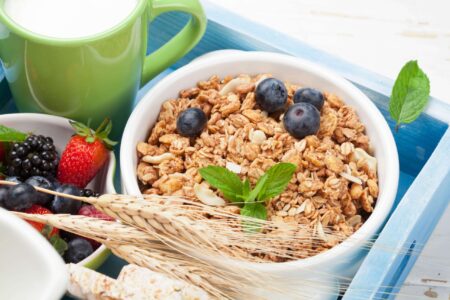
How to Read a Cereal Label Without Getting Lost
The cereal box is designed to sell first and inform second. Our team recommends flipping to the back panel and ignoring the front entirely on the first read.
Key Nutrition Facts to Check
A few numbers make the biggest difference when comparing cereals side by side:
- Fiber — aim for 3g or more per serving for a meaningful daily contribution
- Added sugars — under 6g per serving is a reasonable benchmark
- Protein — most cereals are low in protein; pairing with milk, yogurt, or nuts helps
- Sodium — often overlooked; some cereals are surprisingly high in salt
Our team also pays close attention to the listed serving size. A serving of 3/4 cup looks very modest on a nutrition label, but when measured into an actual bowl it barely covers the bottom. This gap between listed and real-world portions catches most people off guard.
Ingredients That Signal Quality
Whole grain listed as the first ingredient is the most reliable positive signal. A short ingredient list generally points to less processing overall. Our team also flags terms like "multigrain" — this means multiple grains are present but doesn't guarantee any of them are whole. "100% whole grain" is the label claim worth prioritizing.
Watch out: "Natural flavors" on a cereal ingredient list is a broadly defined regulatory term — it can mean almost anything and doesn't guarantee a clean or simple product.
Our Best Tips for Getting More Out of Breakfast Cereals
Pairing Cereals With Drinks and Toppings
The right pairing turns an average cereal bowl into a genuinely satisfying breakfast. Our team has found that adding a protein or fat source alongside a carb-heavy cereal helps slow digestion and prevents the mid-morning energy dip. Some combinations that consistently work well:
- Unsweetened muesli + plain Greek yogurt + fresh berries
- Plain oatmeal + almond butter + sliced banana
- Bran flakes with soy milk for a dairy-free, protein-containing base
- Granola layered over plain skyr with a light drizzle of honey
For drinks alongside cereal, lighter options tend to complement rather than compete with the flavors. Our team has tested morning pairings with herbal teas, which work especially well with muesli and oatmeal bowls. A small glass of low-sugar cranberry juice rounds out the morning without adding excessive sweetness.
Keeping Cereals Fresh
Most people leave cereal in its original box after opening, which works short-term but isn't ideal beyond two to three weeks. Transferring cereal to an airtight container keeps it crunchier for longer and prevents humidity from softening the texture. Our team recommends glass or BPA-free plastic with a tight-sealing lid. Hot cereals like rolled oats do especially well in a cool, dry pantry — unopened, they can last well over a year without quality loss.
Types of Breakfast Cereals Compared Side by Side
Not all types of breakfast cereals are equal when it comes to nutrition, convenience, or versatility. Our team put together this comparison to make the key differences easier to see at a glance.
| Type | Prep Time | Avg. Fiber (per serving) | Typical Sugar Level | Best For |
|---|---|---|---|---|
| Granola | None | 2–4g | Medium–High | Yogurt topping, snacking |
| Muesli | 0–8 hrs (soak optional) | 3–5g | Low | Meal prep, balanced nutrition |
| Corn Flakes | None | 1g | Low–Medium | Quick mornings, light eaters |
| Bran Flakes | None | 5–7g | Low–Medium | High-fiber diet goals |
| Rolled Oats | 5–10 min | 4g | None (added separately) | Customizable, filling breakfasts |
| Steel-Cut Oats | 20–30 min | 4–5g | None | Low glycemic, meal prep |
| Puffed Rice | None | <1g | Low | Light breakfasts, toppings |
Hot vs. Cold Cereals
The hot-versus-cold divide is one of the most practical distinctions in the category. Cold cereals win on pure convenience — no cooking, minimal cleanup, nothing to watch on the stove. Hot cereals generally win on satiety and flexibility. Our team has found that hot cereals tend to keep most people fuller longer, largely because the warm base slows eating pace and the fiber digests more gradually. For anyone comparing breakfast options more broadly, our piece on whether waffles are bad for you provides a useful reference point.
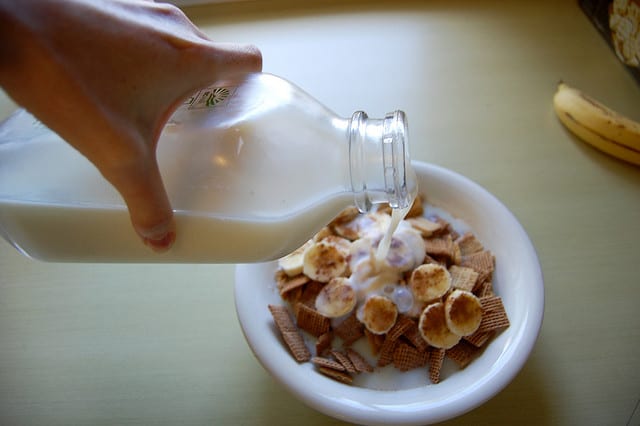
Mistakes Most People Make When Choosing Breakfast Cereal
Trusting the Front of the Box
Cereal packaging is marketing first and nutrition information second. Claims like "made with whole grains," "lightly sweetened," and "good source of fiber" are regulated to varying degrees — but still frequently misleading in practice. "Lightly sweetened" has no legal definition. "Made with whole grains" can mean whole grains appear in small amounts well down the ingredient list.
Our team's standard approach is to flip the box over immediately and start with the ingredient list and nutrition facts panel before anything else. The front of the box is essentially an advertisement — and often a persuasive one. Ignoring it on the first read removes a lot of noise from the decision.
Underestimating Portion Sizes
Cereal serving sizes are often much smaller than what most people actually pour. A listed serving of 3/4 cup is modest on paper. Our team tested that amount across several common bowls — it barely covered the bottom in most cases. Most people eat two to three times the listed serving without realizing it, effectively doubling or tripling all the calorie and sugar numbers on the label.
Pro insight: Measuring cereal with an actual measuring cup for just one week tends to recalibrate expectations significantly — most people are genuinely surprised by how small a listed portion really is.
For those also keeping an eye on liquid calories at breakfast, our overview of aloe vera juice brands covers a low-calorie, functional morning drink that pairs well with any cereal routine.
Building a Smarter Breakfast Cereal Routine
The best breakfast cereal is the one that actually gets eaten consistently. Our team finds that keeping two or three different types on hand — one fast option, one more nutritious — works better than chasing any single "perfect" choice.
For Busy Weekday Mornings
Cold cereals and pre-soaked muesli are the clearest solutions when time is short. Our team recommends keeping at least one no-cook option in the pantry that has at least 3g of fiber and under 8g of added sugar per serving. Pairing it with a protein source — milk, plant-based milk, yogurt, or a handful of nuts — rounds out the meal in under two minutes.
- Pre-soak muesli the night before for a grab-and-go morning jar
- Keep a reliable instant oat packet for the mornings when even pouring feels like too much
- Add frozen berries to cold cereal — they thaw by the time the bowl reaches the table
For Meal Prep and Make-Ahead Breakfasts
Steel-cut oats are the meal prepper's top cereal choice. A large batch cooked on a Sunday evening lasts through most of the workweek refrigerated. Overnight oats — rolled oats soaked in milk or a milk alternative — are another reliable make-ahead format. Our team finds overnight oats especially versatile because they take toppings and flavors extremely well, from nut butter to fresh stone fruit to a light drizzle of honey. For anyone rounding out a plant-based breakfast spread, our guide to vegan pancake mix brands covers another whole-ingredient morning option worth having in the rotation.
Frequently Asked Questions
What are the main types of breakfast cereals?
The main types include granola, muesli, flaked cereals (like corn flakes and bran flakes), puffed cereals (like puffed rice and wheat puffs), and hot cereals such as oatmeal, cream of wheat, and grits. Each type differs in how it's made, its texture, and its nutritional profile.
Is granola the same as muesli?
No. Granola is baked with sweeteners and fat, producing a crunchy, clumpy texture and a higher calorie count. Muesli is raw rolled oats mixed with nuts, seeds, and dried fruit — no baking, no added sweetener in most varieties. Muesli is generally lower in sugar and calories than granola.
Which type of breakfast cereal has the most fiber?
Bran-based cereals typically top the charts, often delivering 5–9g of dietary fiber per serving. Steel-cut oats and whole-grain muesli are also strong sources. Plain puffed rice and standard corn flakes tend to be the lowest in fiber among widely available options.
Are hot cereals healthier than cold cereals?
Not automatically, but hot cereals — especially plain oats — tend to have fewer additives, less added sugar, and comparable or higher fiber than many processed cold cereals. The most reliable approach is reading actual nutrition facts rather than assuming based on format or front-of-box branding.
Can breakfast cereal be part of a vegan diet?
Most cereals are naturally vegan, as they're grain-based with no animal ingredients. The main things to verify are whether the recipe includes honey or milk powder in the ingredient list. Pairing with a plant-based option — such as those covered in our guide to soy milk brands — keeps the full breakfast vegan-friendly.
How should breakfast cereal be stored after opening?
After opening, cereal stays freshest in an airtight container kept in a cool, dry pantry. This prevents moisture from softening the texture and extends shelf life noticeably compared to leaving it in the original box. For hot cereals like rolled oats, an unopened sealed bag can last well over a year in stable pantry conditions.
Final Thoughts
The world of breakfast cereals is broader and more interesting than the cereal aisle might suggest. From raw overnight muesli to baked granola clusters to warm bowls of steel-cut oats, there's a style suited to nearly every palate and morning schedule. Our team encourages anyone ready to make a more informed choice to explore our breakfast cereals resource page — it's the most direct way to find vetted picks matched to specific nutritional goals, dietary preferences, and budget.


About Touseef Shaikh
Touseef Shaikh is a food writer and grocery researcher with years of experience evaluating grocery products for nutritional quality, ingredient transparency, and everyday value. His research-driven approach to food product reviews covers pantry staples, snacks, beverages, fresh produce, and organic alternatives — with a focus on helping shoppers make better decisions at the grocery store without spending more than they need to. At GroceriesReview, he covers food and grocery product reviews, buying guides, and meal planning resources.
You can get FREE Gifts. Or latest Free phones here.
Disable Ad block to reveal all the info. Once done, hit a button below