12 Best Wild Rice Brands – Most Nutritious for Your Recipes
by Touseef Shaikh
Which wild rice brand actually delivers on nutrition, taste, and value — and which ones are just riding the trend? That's the question every shopper deserves a real answer to. After evaluating the top options available in 2026, Lundberg Regenerative Organic Certified Wild Blend Rice earns the top spot for most home cooks — but the right pick depends on your cooking style, dietary priorities, and how often you reach for this grain.
Wild rice is not technically rice at all. It's an aquatic grass seed (Zizania) native to North America, revered for centuries by Indigenous communities and now recognized globally for its outstanding nutritional profile. According to Wikipedia's entry on wild rice, this ancient grain contains nearly double the protein of white rice, significantly more dietary fiber, and a rich profile of antioxidants — all naturally gluten-free and low in fat. Whether you're building a hearty soup, a vibrant grain salad, a Thanksgiving stuffing, or a quick weeknight side, wild rice adds texture, depth, and serious nutritional firepower that few other grains can match.
What makes the buying decision tricky is the sheer variety. You'll find lake-harvested wild rice, cultivated wild rice, organic blends, quick-cook options, and traditionally parched varieties — all labeled as "wild rice" but with meaningfully different flavor profiles, processing methods, and nutritional integrities. If you enjoy stocking a whole-foods pantry, you might also want to explore our guide to the best brands of pinto beans — another high-protein, plant-forward staple worth keeping alongside wild rice. For a comprehensive look at all your options, our full wild rice reviews page covers the complete market. Below, you'll find detailed breakdowns of the seven best wild rice brands worth buying in 2026.

Contents
- Editor's Recommendation: Top Picks of 2026
- Full Product Breakdowns
- Lundberg Regenerative Organic Certified Wild Blend Rice
- Canoe 100% Organic Whole Grain Wild Rice
- Red Lake Nation Minnesota Cultivated Wild Rice
- Moose Lake Wild Black Rice
- MN Wild Rice American Indian Hand Harvested & Wood Parched
- Thousand Lakes Minnesota Grown Wild Rice
- Floating Leaf Organic Wild Rice
- How to Pick the Best Wild Rice
- Frequently Asked Questions
- Next Steps
Editor's Recommendation: Top Picks of 2026
- #PreviewProductRating
- Bestseller No. 1
 Rating:

- Bestseller No. 2
 Rating:
 - Bestseller No. 3
 Rating:
 - Bestseller No. 4
 Rating:
 - Bestseller No. 5
 Rating:
 - Bestseller No. 6
 Rating:
 - Bestseller No. 7
 Rating:

Full Product Breakdowns

These seven wild rice brands represent the strongest options on the market in 2026. Each one has been evaluated on sourcing transparency, processing method, flavor profile, nutritional completeness, certifications, and real-world usability. Here's everything you need to make the right call — product by product.
1. Lundberg Regenerative Organic Certified Wild Blend Rice — Best Overall
If you want one bag that covers everything — nutrition, versatility, visual appeal, and flavor — Lundberg's Wild Blend is the clear winner. This 32-ounce bag combines black, brown, red, and wild rice into a stunning multi-grain blend that performs beautifully across a wide range of dishes. The color variety alone makes it a table-worthy presentation grain, but the real story is what's inside each hull: a whole-grain profile that delivers fiber, minerals, and antioxidants from multiple rice varieties at once.
Lundberg Family Farms has farmed California's Sacramento Valley for generations, and their shift to regenerative organic agriculture puts them ahead of most competitors on environmental credibility. Regenerative farming goes beyond organic — it actively rebuilds soil health and sequesters carbon, which means buying this product is a choice that extends beyond your kitchen. The blend is Non-GMO Project Verified, USDA Certified Organic, gluten-free, 100% whole grain, vegan, and Kosher. That's one of the most complete certification lists in this category.
On the stovetop, plan for 45–50 minutes — this is a whole-grain blend, not a quick cook. The flavor payoff is worth it: earthy, nutty, slightly chewy grains that hold their structure in soups, pilafs, grain bowls, and stuffing without turning mushy. At 32 ounces, you're getting exceptional value per ounce compared to smaller premium bags. This is the brand you'll come back to repeatedly.
Pros:
- Multi-color blend of black, brown, red, and wild rice — visually stunning on the plate
- Certified Organic, Non-GMO, gluten-free, vegan, and Kosher — covers nearly every dietary need
- Regenerative organic farming — strongest sustainability credentials on this list
- Versatile across soups, grain bowls, stuffing, pilafs, and salads
- 32 oz bag provides excellent value per ounce
- Holds texture well — doesn't turn mushy in liquid-based dishes
Cons:
- Cook time is 45–50 minutes — not suitable for quick weeknight prep without planning ahead
- Premium price point compared to conventional or non-organic blends

2. Canoe 100% Organic Whole Grain Wild Rice — Best for Traditional Flavor
Canoe's wild rice comes from pristine Minnesota and Canadian waterways, and what makes it stand out from most competitors is the processing method. Rather than the modern parboiled approach — which speeds up cook time but flattens flavor — Canoe uses a traditional 100-year-old roasting method called parching that imparts a genuinely smoky, nutty depth you won't get anywhere else in this price range. If you've only ever eaten commercial wild rice blends, tasting properly parched wild rice is a genuine revelation.
Minnesota wild rice carries a designation that no other state can claim: it's the official state grain, and it's legally protected from genetic modification. That Non-GMO status isn't just a marketing claim — it's backed by state law. Harvested from clean northern lakes and rivers, each grain retains its full nutritional hull and the complex, minerally flavor that comes from naturally cold, clean growing conditions. The USDA Organic certification confirms no synthetic pesticides or fertilizers were used in the growing process.
This 1-pound bag is ideal for home cooks who want a pure, premium wild rice experience without blending or additives. Cook time runs 45–55 minutes, and the resulting grains are plump, chewy, and deeply flavored. Use it in classic Minnesota wild rice soup, stuffed bell peppers, or a simple side with roasted root vegetables and quality olive oil. The flavor is complex enough to let it stand on its own.
Pros:
- 100-year-old parching (roasting) method delivers superior smoky, nutty flavor
- Sourced from pristine Minnesota and Canadian waterways
- USDA Certified Organic with legally protected Non-GMO status
- Pure 100% wild rice — no blends, no fillers, no additives
- Rich, complex flavor profile — the best tasting on this list
Cons:
- 1-pound bag requires multiple orders for bulk cooking or large families
- Traditional processing means longer and slightly less predictable cook time
3. Red Lake Nation 100% All Natural Minnesota Cultivated Wild Rice — Best Bulk Buy
When you need wild rice in real volume — for a large household, weekly meal prep, or occasional catering — Red Lake Nation's 5-pound bag is the smartest purchase on this list. The Red Lake Nation brand carries authentic Indigenous Minnesota heritage, and their cultivated wild rice is grown and harvested with practices that prioritize both quality and consistency. This isn't a commodity product slapped with a regional label — it's the real thing, just grown at meaningful scale.
Cultivated wild rice grows in managed paddies rather than open lake beds, which results in more uniform grain size and more predictable cooking times compared to lake-harvested varieties. That consistency is a genuine advantage when you're cooking for a crowd or prepping multiple batches across a week. The flavor is distinctly wild rice — earthy, nutty, and chewy — just with less of the batch-to-batch variability you'd get from small-harvest lake rice. The product is 100% all natural with no preservatives, additives, or fillers of any kind.
Five pounds of quality wild rice is a meaningful pantry investment, but the per-pound cost makes it one of the most economical ways to keep this grain stocked year-round. If you eat wild rice two or three times a week in soups, salads, and grain dishes, this format eliminates the constant reordering that smaller bags require. Stock it once, store it in an airtight container, and you're set for months.
Pros:
- 5-pound bulk format — significantly lower cost per pound than smaller bags
- 100% all natural — no additives, preservatives, or fillers
- Consistent grain size from cultivated growing — predictable cook time
- Authentic Minnesota origin with genuine Indigenous brand heritage
- Ideal for meal prep, large-batch cooking, and catering
Cons:
- 5-pound volume is overkill for casual or infrequent users
- Cultivated vs. lake-harvested means a slightly milder, less complex flavor profile
4. Moose Lake Wild Rice — Best Black Wild Rice for Antioxidants
Moose Lake Wild Rice zeroes in on what health-focused buyers care about most: antioxidant density, clean sourcing, and zero contaminants. This 16-ounce bag of hand-harvested Minnesota wild black rice comes with recipe cards included — a practical touch that makes it accessible if you're new to cooking with this grain. The health story is compelling: black wild rice gets its dark color from anthocyanins, the same powerful antioxidants found in blueberries and blackberries, which research associates with reduced inflammation, lower risk of chronic disease, and better cardiovascular health.
The arsenic claim is worth your attention. Unlike paddy-grown rice — including many brown and white rice varieties — native wild rice grown in free-flowing lakes and rivers accumulates far less inorganic arsenic. For anyone who eats rice multiple times per week, this distinction matters from a long-term health standpoint. Moose Lake's rice is also naturally gluten-free and Non-GMO, checking both boxes without requiring a premium certification label to prove it.
Hand harvesting preserves grain integrity in ways that mechanical harvesting can damage, and you'll notice the difference in texture: plump, evenly cooked grains with good chew and consistent absorption. The included recipes make this a thoughtful gift option, and the health-forward positioning makes it the first choice if you're specifically buying wild rice for its wellness benefits rather than just as a side grain.
Pros:
- High anthocyanin antioxidant content — supports heart health and reduces inflammation
- Naturally low in arsenic — grown in free-flowing Minnesota waters
- Naturally gluten-free and Non-GMO
- Hand harvested for superior grain integrity and texture
- Includes recipe card — excellent for first-time wild rice cooks
Cons:
- 16 oz runs out quickly if you cook wild rice multiple times per week
- Higher cost per ounce than bulk options — not the best value for frequent cooking
5. MN Wild Rice American Indian Hand Harvested & Wood Parched — Best for Authenticity
This is as authentic as wild rice gets in 2026. Hand harvested by canoe using traditional American Indian methods and then cedar wood parched over an open fire, this 1-pound offering represents the original way of processing wild rice before industrial operations changed everything. You're not just buying a grain — you're connecting with a food practice that Indigenous communities in Minnesota have sustained for generations. That provenance is embedded in every single grain.
The wood parching process produces a flavor that's in a class of its own: deep, smoky, almost campfire-like, with a complexity that no industrial roaster can replicate. The grains are 100% all natural — pure lake-harvested wild rice with zero additives, no salt, no processing aids, nothing. If you've only ever tasted commercially processed wild rice, this product will recalibrate your expectations entirely. The earthiness is more pronounced, the texture slightly more rustic, and the overall experience more connected to the grain's actual origin.
Be prepared for some natural variability in grain size and cook time — that's inherent to small-batch, traditionally processed food, and it's a feature rather than a flaw. Monitor the cooking process more attentively than you would with cultivated rice, and you'll be rewarded. This pairs beautifully with other heritage whole grains — if you enjoy building meals around authentic, unprocessed grains, check out our roundup of the top breakfast grits for more inspiration.
Pros:
- Authentic hand-harvested by canoe using traditional Indigenous methods
- Cedar wood parched — deep, smoky, complex flavor unlike anything commercially processed
- 100% all natural — zero additives, pure wild rice
- Supports traditional Indigenous food heritage and practices
- Unique flavor profile and provenance story you won't find elsewhere
Cons:
- Small-batch production means availability can fluctuate
- Natural variability in grain size requires attentive cooking — not set-and-forget
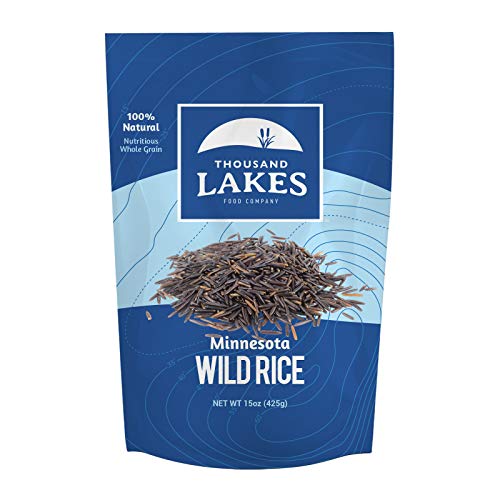
6. Thousand Lakes Minnesota Grown Wild Rice — Best Pure 100% Wild Rice
Thousand Lakes takes the simplest possible approach and executes it perfectly. Their 15-ounce resealable pouch contains a single ingredient: wild rice. No salt, no preservatives, no blended cheaper varieties, no filler grains. Just 100% Minnesota-grown wild rice with the nutritious black outer hull fully intact. That hull is a meaningful detail — many processors remove it to shorten cook time, but stripping the hull sacrifices fiber, B vitamins, and trace minerals. Thousand Lakes keeps it on.
The grain quality is visibly premium: each kernel measures approximately 3/8 of an inch long, which is a reliable indicator of proper maturation and careful harvesting. Shorter grains typically come from immature or mechanically damaged harvests. The resealable zipper pouch is a practical design choice that most all-natural products skip — it keeps the rice properly stored between uses without transferring it to a separate container, which matters when there are no preservatives maintaining freshness over time.
Nutritionally, you're getting nearly double the protein of white rice, significantly more dietary fiber, and a naturally low-fat profile. Wild rice is a whole grain that earns its label — nothing has been processed out of it. If you're building a whole-foods kitchen and want grains you can trust completely, Thousand Lakes is a dependable workhorse. It pairs well with plant-based cooking staples — if you're interested in that direction, our guide to the best vegan flour brands for baking is worth a look for rounding out your whole-foods pantry.
Pros:
- Single ingredient — 100% Minnesota-grown wild rice, nothing else
- Black outer hull fully preserved for maximum fiber and nutrient retention
- Premium-grade grains (~3/8 inch length) — visible quality indicator
- Resealable zipper pouch keeps rice fresh without secondary storage
- No preservatives, no salt, no additives of any kind
Cons:
- 15 oz size is not enough for large families cooking multiple servings weekly
- Full hull intact means cook time is on the longer end — plan for 50+ minutes
7. Floating Leaf Organic Wild Rice — Best Quick-Cook Option
Floating Leaf solves the biggest barrier to eating wild rice regularly: the cook time. Traditional wild rice takes 45–55 minutes. Floating Leaf's ready-in-minutes formula cuts that dramatically while holding onto the certifications that health-conscious buyers care about — Certified Organic, Non-GMO, and vegan. This six-pack of 4-ounce portions is designed for convenience without compromise, and it delivers on that promise.
The portion-controlled format is a genuine advantage for individuals and couples. Each 4-ounce bag gives you just what you need for one or two servings, eliminating the measuring, the leftovers, and the second-guessing about quantities. There's no sacrifice on the organic or Non-GMO credentials — Floating Leaf maintains both even with the faster processing that makes quick cooking possible. The vegan certification means it slots easily into plant-based meal plans without any adjustments.
The trade-off is cost. On a per-ounce basis, you're paying a convenience premium compared to bulk or standard-bag options. For a large family that eats wild rice several times a week, this format gets expensive fast. But for a solo cook or a couple who wants to eat wild rice without committing to a 45-minute cooking window on a Tuesday night, Floating Leaf eliminates the friction entirely. It's the most accessible entry point to regular wild rice consumption on this list.
Pros:
- Ready in minutes — dramatically shorter cook time than traditional wild rice
- Certified Organic, Non-GMO, and vegan — full certification stack
- Six-pack of 4 oz portion-controlled bags — perfect for individuals and couples
- No compromises on ingredient quality despite faster preparation
- Removes the biggest barrier to regular wild rice cooking
Cons:
- Significantly higher cost per ounce compared to traditional format bags
- 4 oz bags too small for feeding a family or cooking for guests
How to Pick the Best Wild Rice
Before you buy, it helps to understand what actually separates premium wild rice from mediocre options. These four criteria will steer you toward the right purchase every time.
Lake-Harvested vs. Cultivated Wild Rice
This is the most important distinction in the wild rice category. Lake-harvested wild rice grows naturally in shallow lakes and rivers — it develops slowly, absorbs minerals from the water, and produces a grain with more complex flavor and higher nutritional variability. Cultivated wild rice grows in managed paddies, producing a more uniform grain with a milder flavor and more predictable cooking behavior. Neither is objectively superior. Lake-harvested suits flavor-first cooks; cultivated suits consistency-first cooks. If you're doing bulk prep or feeding picky eaters, cultivated is more forgiving. If flavor depth is your priority, go lake-harvested every time.

Processing Method: Parched vs. Parboiled
How the rice is processed after harvest has an enormous impact on flavor. Traditional parching — roasting over wood or in a drum — concentrates natural sugars and creates complex, smoky, nutty notes. Parboiling (partial boiling before drying) shortens cook time but strips flavor. Most commercial wild rice you find in grocery stores is parboiled. If you see "traditionally roasted" or "wood parched" on a label, that's a signal of a far more flavorful product. Parching is worth seeking out if you want to taste what wild rice actually tastes like at its best.

Organic and Non-GMO Certifications
Wild rice from Minnesota is legally protected from genetic modification at the state level, which gives any Minnesota-sourced product inherent Non-GMO credibility. But not all wild rice sold as "wild" comes from Minnesota, and not all of it is organically grown. Look for USDA Certified Organic if you want to avoid synthetic pesticides. Non-GMO Project Verified is worth the added assurance on blended products (like Lundberg) that may contain other rice varieties not covered by state-level protections. For pure 100% wild rice sourced from Minnesota or Canadian waters, Non-GMO is essentially guaranteed by origin — but organic certification still matters for chemical exposure.
Format and Quantity: Match to Your Cooking Habits
Wild rice format matters more than most shoppers realize. Consider these questions before you buy:
- How often do you cook wild rice? Weekly cooks benefit from bulk (5 lb). Occasional cooks should start with 1 lb.
- How many people are you feeding? Portion bags (Floating Leaf) are perfect for one or two; large families need bulk or multi-pound bags.
- How much time do you have? If cook time is a real obstacle, quick-cook formats justify their higher per-ounce cost.
- Do you want a blend or pure wild rice? Blends (Lundberg) offer variety and visual appeal; pure wild rice (Thousand Lakes, Canoe) gives you full control over your grain mix.
- Is provenance important to you? If supporting Indigenous communities or regenerative farms matters, the brand origin should factor into your decision.
Frequently Asked Questions
Is wild rice actually rice?
No. Despite the name, wild rice is not botanically related to Asian rice (Oryza sativa). It's the seed of an aquatic grass in the Zizania genus, native to North America. It shares a similar cooking and eating profile with rice, which is why the name stuck, but nutritionally and botanically it's a distinct grain. The confusion is harmless, but knowing the difference helps you understand why wild rice has such a different texture, flavor, and nutritional profile compared to white or brown rice.
How long does wild rice take to cook?
Traditional wild rice takes approximately 45–55 minutes on the stovetop using a 1:3 ratio (1 cup rice to 3 cups water or broth). The hull-intact varieties on the longer end of that range. Quick-cook options like Floating Leaf dramatically reduce this. To speed things up with traditional wild rice, you can also soak the grains in cold water for several hours before cooking, which cuts stovetop time to around 30–35 minutes. A rice cooker on the brown rice setting also works well and requires no monitoring.
Is wild rice gluten-free?
Yes, wild rice is naturally 100% gluten-free. It contains no wheat, rye, barley, or any related gluten proteins. For people with celiac disease or non-celiac gluten sensitivity, wild rice is one of the safest grain choices available. However, if you're buying a blended product, always check the label to ensure no gluten-containing grains have been added and that the product is processed in a gluten-free facility to avoid cross-contamination. All pure wild rice products on this list are gluten-free.
What is the difference between wild rice and cultivated wild rice?
Wild rice refers to grains harvested from naturally occurring lake and river beds. Cultivated wild rice is the same species grown in managed paddies or controlled water environments. Lake-harvested wild rice tends to have more complex, earthy, and variable flavor due to natural growing conditions. Cultivated wild rice is more consistent in grain size and cook time, with a slightly milder flavor. Both are nutritionally comparable. The distinction matters most for flavor-focused cooks — for everyday cooking and meal prep, cultivated is excellent.
Does wild rice have more protein than brown rice?
Yes. Wild rice contains approximately 6–7 grams of protein per cooked cup, compared to roughly 5 grams for brown rice and about 4 grams for white rice. It also delivers more dietary fiber and a broader antioxidant profile, particularly the anthocyanins responsible for the deep black color of whole wild rice grains. Wild rice is not a complete protein on its own (it's lower in lysine), but combined with legumes like lentils or pinto beans, it forms a complete amino acid profile. It's one of the most nutritionally dense whole grains available.
How should I store wild rice after opening?
Uncooked wild rice stores well in a cool, dry location in an airtight container. Properly stored, it keeps for up to a year — longer if refrigerated or frozen. The resealable pouch on Thousand Lakes makes this convenient straight from the bag. Once cooked, wild rice keeps in the refrigerator for 4–6 days and freezes well for up to 6 months. Freeze cooked wild rice in portioned bags for easy weeknight additions to soups or grain bowls without any additional cooking required.
Buy on Walmart
- Lundberg Regenerative Organic Certified Wild Blend Rice – Br — Walmart Link
- Canoe 100% Organic Whole Grain Wild Rice, Minnesota Harveste — Walmart Link
- Red Lake Nation 100% All Natural Minnesota Cultivated Wild R — Walmart Link
- Moose Lake Wild Rice - Minnesota Cultivated Wild Black Rice — Walmart Link
- 1 LB MN WILD RICE AMERICAN INDIAN HAND HARVESTED & WOOD PARC — Walmart Link
- Thousand Lakes Minnesota Grown Wild Rice - 15 ounces | 100% — Walmart Link
- Floating Leaf Organic Wild Rice, Ready In Minutes, Non GMO, — Walmart Link
Buy on eBay
- Lundberg Regenerative Organic Certified Wild Blend Rice – Br — eBay Link
- Canoe 100% Organic Whole Grain Wild Rice, Minnesota Harveste — eBay Link
- Red Lake Nation 100% All Natural Minnesota Cultivated Wild R — eBay Link
- Moose Lake Wild Rice - Minnesota Cultivated Wild Black Rice — eBay Link
- 1 LB MN WILD RICE AMERICAN INDIAN HAND HARVESTED & WOOD PARC — eBay Link
- Thousand Lakes Minnesota Grown Wild Rice - 15 ounces | 100% — eBay Link
- Floating Leaf Organic Wild Rice, Ready In Minutes, Non GMO, — eBay Link
Next Steps
- Check current prices on Amazon for each brand above — prices shift regularly, and your top pick by value may change depending on active deals or subscribe-and-save discounts.
- Decide on your format first — pure wild rice vs. blend, bulk vs. portion-controlled, quick-cook vs. traditional — then narrow your shortlist to two or three options that match your actual cooking habits.
- Order your top pick and cook a simple test batch — use a 1:3 rice-to-water ratio with a pinch of salt and nothing else, so you can taste the grain's true flavor before building it into recipes.
- Browse the full wild rice category at our wild rice reviews page to see additional brands, reader ratings, and any new options added since this post was published in 2026.
- Compare to your current go-to grain — if you regularly cook brown rice, quinoa, or farro, try substituting wild rice in one meal per week and evaluate the difference in flavor, satiety, and how it holds up in soups or salads over time.


About Touseef Shaikh
Touseef Shaikh is a food writer and grocery researcher with years of experience evaluating grocery products for nutritional quality, ingredient transparency, and everyday value. His research-driven approach to food product reviews covers pantry staples, snacks, beverages, fresh produce, and organic alternatives — with a focus on helping shoppers make better decisions at the grocery store without spending more than they need to. At GroceriesReview, he covers food and grocery product reviews, buying guides, and meal planning resources.
You can get FREE Gifts. Or latest Free phones here.
Disable Ad block to reveal all the info. Once done, hit a button below